Thursday, March 27, 2014

We are gathered here today to celebrate yoga: Take my yoke upon you and learn from me, for I am gentle and humble in heart, and you will find rest for your souls.


The word yoga is a Sanskrit word that can be derived from either of two roots, yujir yoga (meaning to yoke) or yuj samādhau (meaning to concentrate).


First, yoga meaning to yoke.
 
2,600 years ago, when observing the absolute devastation brought by God on Jerusalem and on His Temple, the prophet Jeremiah says:

The Lord is good to those whose hope is in him, to the one who seeks him;
it is good to wait quietly for the salvation of the Lord.
It is good for a man to bear the yoke while he is young.
 
Let him sit alone in silence, for the Lord has laid it on him.
Let him bury his face in the dust— there may yet be hope.
Let him offer his cheek to one who would strike him, and let him be filled with disgrace. Lam 3:25-30)
 
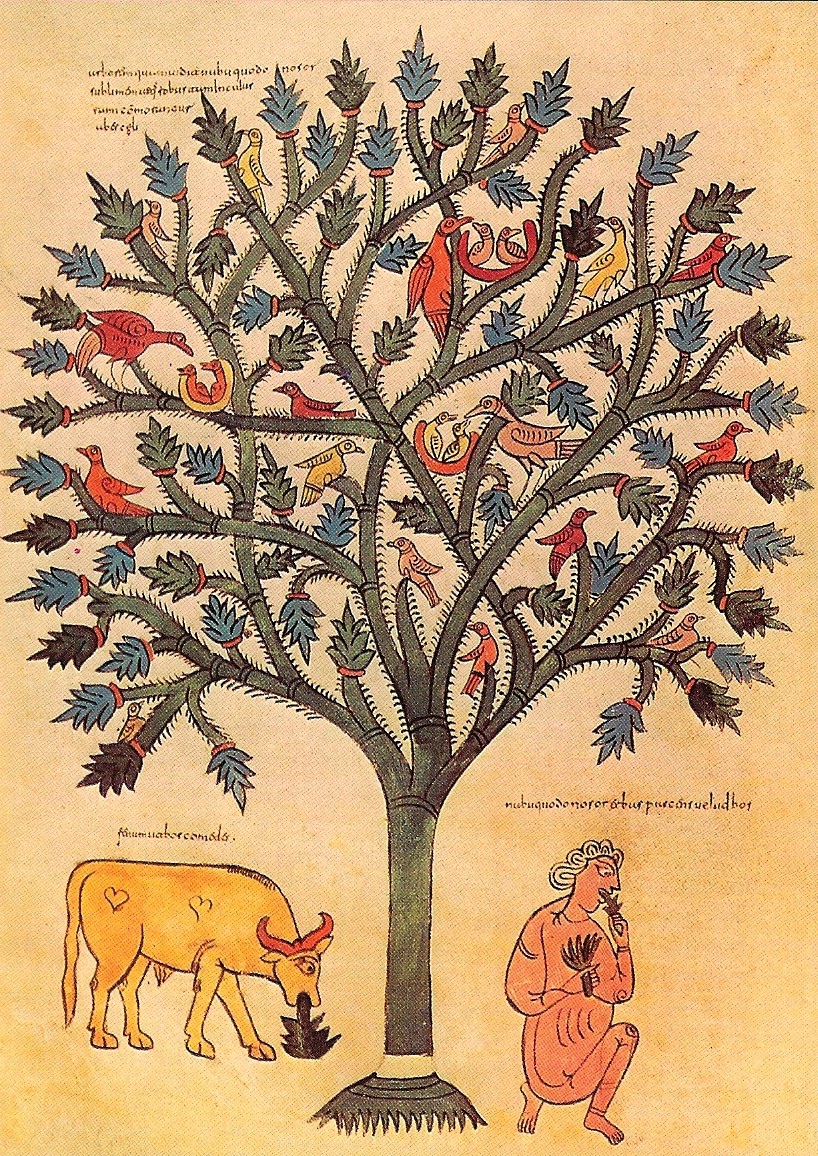
To Jesus Christ, to be yoked to God is like being a branch on His vine.
 
Jesus Christ says:
 
“I am the true vine, and my Father is the gardener. He cuts off every branch in me that bears no fruit, while every branch that does bear fruit he prunes so that it will be even more fruitful. You are already clean because of the word I have spoken to you. Remain in me, as I also remain in you. No branch can bear fruit by itself; it must remain in the vine. Neither can you bear fruit unless you remain in me.
 
“I am the vine; you are the branches. If you remain in me and I in you, you will bear much fruit; apart from me you can do nothing. If you do not remain in me, you are like a branch that is thrown away and withers; such branches are picked up, thrown into the fire and burned. If you remain in me and my words remain in you, ask whatever you wish, and it will be done for you. This is to my Father’s glory, that you bear much fruit, showing yourselves to be my disciples.” (Jn 15:1-8)

The yoke of Jesus Christ is easy and His burden is light.
 
Jesus Christ says:
 
“Come to me, all you who are weary and burdened, and I will give you rest.  Take my yoke upon you and learn from me, for I am gentle and humble in heart, and you will find rest for your souls. For my yoke is easy and my burden is light.” (Mt 11:25-30)


Second, yoga as concentration (or meditation).
 
Forty years after God brought Israel out of slavery and oppression in Egypt with a mighty hand and an outstretched arm, Moses, the servant of the Lord, dies.
 
God says to Joshua:
 
“Be strong and very courageous. Be careful to obey all the law my servant Moses gave you; do not turn from it to the right or to the left, that you may be successful wherever you go. Keep this Book of the Law always on your lips; meditate on it day and night, so that you may be careful to do everything written in it. Then you will be prosperous and successful. Have I not commanded you? Be strong and courageous. Do not be afraid; do not be discouraged, for the Lord your God will be with you wherever you go.” (Josh 1:1-9)  
 
Psalmists write about meditation:
 
Blessed is the one who does not walk in step with the wicked or stand in the way that sinners take or sit in the company of mockers, but whose delight is in the law of the Lord, and who meditates on his law day and night. (Ps 1:1-2)

meditate on your precepts and consider your ways.
 
Though rulers sit together and slander me, your servant will meditate on your decrees.
 
Cause me to understand the way of your precepts, that I may meditate on your wonderful deeds.
 
I reach out for your commands, which I love, that I may meditate on your decrees.

May the arrogant be put to shame for wronging me without cause;
but I will meditate on your precepts.

Oh, how I love your law! I meditate on it all day long.

I have more insight than all my teachers, for I meditate on your statutes.

My eyes stay open through the watches of the night, that I may meditate on your promises. (Ps 119:15, 23, 27, 48, 78, 97, 99, 148)

The apostle Paul says:

Finally, brothers and sisters, whatever is true, whatever is noble, whatever is right, whatever is pure, whatever is lovely, whatever is admirable— if anything is excellent or praiseworthy— think (or meditate) about such things. (Phil 4:8)

May these words of my mouth and this meditation of my heart be pleasing in your sight, Lord, my Rock and my Redeemer. (Ps 19:14)




Friday, March 7, 2014

A Personal and Inspirational Story From 4,000 Years Ago About A Slave Overcoming Adversity


My name is Joseph, son of Jacob, son of Isaac, son of Abraham.

I was born 4,000 years ago in Canaan where modern day Israel is located. My father Jacob had two wives, my mother Rachel and her sister Leah, and two concubines, Zilpah and Bilhah. My father only wanted to marry my mother Rachel, but on their wedding night in the darkness, my grandfather Laban substituted his other daughter Leah for Rachel. When the sun came up the next morning, my father woke up to find that he had married the wrong woman! My mother Rachel later died giving birth to my little brother Benjamin.

My eleven brothers are evil. My brother Reuben slept with my father Jacob’s concubine. My brothers Simeon and Levi, on hearing that Shechem, the son of the ruler of a city, had raped my sister Dinah, killed all the men of the city. My brother Judah slept with a prostitute who turned out to be his widowed daughter in law for whom he had refused to find a new husband. Her name was Tamar and she gave birth to my twin nephews who are also my twin grandnephews in law, Perez and Zerah.

When I was seventeen and shepherding flocks with my brothers, I told my father about what a bad job my brothers were doing. Of my eleven brothers, I was my father’s favorite because I had been borne to him in his old age. He loved me more than the others. He even made me an ornate robe. As a result, my brothers were jealous and hated me and would not speak kindly tom me. Perhaps you’ve heard about my ornate robe in the musical “Joseph and the Amazing Technicolor Dreamcoat”.

Ever since I was young, God would communicate to me through dreams. I once told my brothers about one dream in which we were binding sheaves of grain in the field when my sheaf rose and stood upright, while my brothers’ sheaves gathered around mine and bowed down to it. My brothers hated me even more and asked, “Do you intend to reign over us? Will you actually rule us?” I had another dream in which the sun and the moon and the eleven stars were bowing down to me. I told my father and my brothers about it. My father rebuked me and my brothers were jealous again.

One day, my father sent me to check on my brothers who were out shepherding flocks. I travelled a long distance to find them, and when they saw me coming in the distance, they plotted to kill me! But when they saw some merchants taking goods to Egypt, they sold me to the merchants for twenty shekels of silver.

My brothers dipped my Amazing Technicolor Dreamcoat in blood and told my father Jacob that they had found it. My father concluded that a ferocious animal had devoured me. He swore that he would mourn my death until he joined me in the grave.

The merchants who bought me took me down to Egypt. They sold me to Potiphar, the captain of the guard and one of Pharaoh’s officials in Egypt. While living in Potiphar’s house as his slave, God was with me and gave me success in everything that I did. I found favor in my master Potiphar’s eyes. I was in charge of everything Potiphar had and God blessed everything Potiphar had.

I was a very handsome man and Potiphar’s wife took notice of me. She said, “Come to bed with me!” I refused because to go to bed with her would have been a wicked thing and a sin against god. But day after day, Potiphar’s wife kept speaking with me. One day, when the house was empty, Potiphar’s wife grabbed my coat and said, “Come to bed with me!” I dropped my coat and ran out of the house. Potiphar’s wife accused me of attempting to rape her! My master Potiphar was burning with anger. He took me and threw me in prison among the king’s prisoners.

While I was in prison, God was with me. God granted me favor in the eyes of the prison warden and gave me success in everything I did. The warden put me in charge of everything he had including all the prisoners. One day, Pharaoh threw his chief cupbearer and chief baker in my prison. They each had a dream which I correctly interpreted with God’s help. I predicted that the chief cupbearer would be restored to his former position and that the chief baker would be executed. What I predicted took place. I told the chief cupbearer that I was innocent and I begged him to remember me when he got out of prison. He forgot about me.

Even after going through these horrible experiences, I never whined, complained, or murmured. I never cursed God or ceased to believe in Him.

One night, Pharaoh had two dreams that troubled his mind, and none of the magicians and wise men of Egypt could interpret them. The chief cupbearer remembered me and I was called before Pharaoh. God enabled me to correctly interpret Pharaoh’s dream: that there would be seven years of great abundance followed by seven years of severe famine. I also laid out a plan that Pharaoh could adopt to avoid the ruin that would come with the seven years of famine. Pharaoh was so impressed that he made me Prime Minister of Egypt, second only to him in the whole land. During the seven years of abundance, I bought grain, and during the seven years of famine, I sold grain.

The famine was so great that it hit Canaan where my father Jacob and my brothers were living. My father sent my brothers to Egypt because he had heard there was grain there. But he kept my little brother Benjamin with him because Benjamin had replaced me as his favored youngest son. When my brothers arrived and came to me to buy grain, they did not recognize me and they bowed down to me just as I had dreamt many years ago. Speaking to them through an interpreter, I accused them of being spies. When they told me that my little brother Benjamin was still in Canaan, I threw my half-brother Simeon in prison, and sent them back to Canaan with bags full of grain. I demanded that they bring me my little brother Benjamin to prove they were not spies.

At first, my father Jacob refused to let his favored youngest son Benjamin go to Egypt, but the famine was going to last for seven years, and finally he relented. My brothers came back to Egypt, this time with my little brother Benjamin, and again they bowed down to me as I had dreamt many years ago. I filled their bags with grain and placed a silver cup in my little brother Benjamin’s bag. I then accused my little brother Benjamin, my father’s new favorite, of having stolen my silver cup. I told my brothers that as punishment I would keep Benjamin as my slave. But when my brother Judah offered to take Benjamin’s place as my slave, I could no longer control myself.

I spoke to my brothers in their language:
“I am your brother Joseph, the one you sold into Egypt! And now, do not be distressed and do not be angry with yourselves for selling me here, because it was to save lives that God sent me ahead of you. For two years now there has been famine in the land, and for the next five years there will be no plowing and reaping. But God sent me ahead of you to preserve for you a remnant on earth and to save your lives by a great deliverance. So then, it was not you who sent me here, but God.” (Gen 45:4b-8a)
I invited my entire family of 66 persons to move from Canaan to Egypt to survive the famine. My father Jacob, who was 130 years of age, wept for a long time when he met me for the first time in decades. After my father Jacob died at 147 years of age, my brothers were afraid I’d hold a grudge against them and pay them back for all of the wrongs they had done to me. Once again, they threw themselves down before me and said, “We are your slaves,” just as I had dreamed many years before.

I reassured them and I spoke kindly to them:
“Don’t be afraid. Am I in the place of God? You intended to harm me, but God intended it for good to accomplish what is now being done, the saving of many lives. So then, do not be afraid. I will provide for you and your children.” (Gen 50:19b-21a)
So I lived in Egypt along with my brothers and their families until I was 110 years old. On my deathbed, I made my family, the Israelites, swear an oath to me that when God would come to their aid and take the Israelites up out of Egypt to the land that he promised on oath to Abraham, Isaac, and Jacob, that they would carry my bones up from Egypt.

My name is Joseph, son of Jacob, son of Isaac, son of Abraham. This is the story of my life. If you want to learn more about me, read the Book of Genesis.

Thursday, February 27, 2014

Extra-Biblical Evidence Supports the Contention in Chapter 4 of the Book of Daniel that Nebuchadnezzar (634 – 562 BC) Went Mad For Seven Years


The account of the king’s chastisement/madness/illness/exile and restoration has several parallels outside the Old Testament.

(a) The Greek writer Megasthenes (c. 300 B.C.) writes of Nebuchadnezzar announcing from his palace roof under some god’s inspiration the coming fall of Babylon to “a Persian mule,” who Nebuchadnezzar wishes might rather take himself off to some animal-like existence (see Eusebius, Parep. Ev. 9.41.6).

(b) A fragmentary cuneiform text apparently refers to some mental disorder on Nebuchadnezzar’s part, and perhaps to his neglecting and leaving Babylon (Grayson, Texts, 87-92; cf. Hasel, Andrews University Seminary Studies 19 [1981] 41-42).

(c) Josephus refers to an illness of which Nebucchadnezzar dies (Contra Apionem 1.20 [1.146]).

(d) “The Babylonian Job” (Ludlul bel nemeqi, “I Will Praise the Lord of Wisdom,” J.B. Pritchard (e.d.), Ancient Near Eastern Texts (Princeton: Princeton UP, rev. 1969) 596-600) testifies to chastisement by God, illness, humiliation, seeking interpretation of a terrifying dream, being thrown over like a tree, being put outside, eating grass, losing understanding, being like an ox, being rained on by Marduk, nails being marred, hair growing, and being fettered, and then to a restoration for which he praises the god (Ball, Expositor viii, 10 [1920] 235-40).

(e) In a number of inscriptions, especially from Harran, Nabonidus testifies to praying before Marduk for a long and successful reign and receiving the deity’s promise that these would be granted, and to being led by a dream to spend ten years away from Babylon in Tema in Arabia, but then to return to Babylon. Other inscriptions refer in the third person to his years away from Babylon and (with hostility) to his being punished for his “mad” neglect of Babylon’s deities (Ancient Near Eastern Texts 305-16, 560-63; Gadd, Anatolian Studies 8 [1958] 35-92; Rollig, Zeitschrift für Assyriologie 56 [1964] 218-60). Nabonidus is the only known Babylonian dreamer (Oppenheim, “Dreams,” 186).

(f) The Qumran “Prayer of Nabonidus” comprises Nabonidus’s testimony to his being afflicted by God for seven years in Tema by a physical illness. He prayed to his gods for healing, but received it only after a Jewish exorcist exhorted him to honor the true God. On Nabonidus, see Saggs, Babylon, 145-52; Oppenheim, Mesopotamia, 152-53.

Source: Goldingay, John. Daniel – World Biblical Commentary Series. Nashville: Thomas Nelson Publishers, 1989, pages 83-84.

At the end of that time, I, Nebuchadnezzar, raised my eyes toward heaven, and my sanity was restored. Then I praised the Most High; I honored and glorified him who lives forever.

His dominion is an eternal dominion;
his kingdom endures from generation to generation.
All the peoples of the earth are regarded as nothing.
He does as he pleases with the powers of heaven and the peoples of the earth.
No one can hold back his hand or say to him: “What have you done?”

At the same time that my sanity was restored, my honor and splendor were returned to me for the glory of my kingdom. My advisers and nobles sought me out, and I was restored to my throne and became even greater than before. Now I, Nebuchadnezzar, praise and exalt and glorify the King of heaven, because everything he does is right and all his ways are just. And those who walk in pride he is able to humble. (Dan 4:34-37)

Tuesday, February 4, 2014

God's International Speech: Go and make disciples of all nations, baptizing them in the name of the Father and of the Son and of the Holy Spirit, and teaching them to obey everything I have commanded you.


I recently entered a Toastmasters International Speech Competition and I presentented "God's International Speech".

After His arrest, conviction, crucifixion, burial, and resurrection, Jesus Christ says to His disciples:
“All authority in heaven and on earth has been given to me. Therefore go and make disciples of all nations, baptizing them in the name of the Father and of the Son and of the Holy Spirit, and teaching them to obey everything I have commanded you. And surely I am with you always, to the very end of the age.” (Mt 28:18b-20)
This command from the resurrected Jesus Christ has been followed now for the last 2,000 years. To this day, churches around the world baptize men, women, children, and cute cuddly little babies in the name of the Father and of the Son and of the Holy Spirit.

We live in an age of positive thinking. So I would like to point out Jesus Christ’s international speech is a much more positive international speech than the international speech given by God at the time of Noah when God sent an international flood to kill off all creatures because:
The Lord saw how great the wickedness of the human race had become on the earth, and that every inclination of the thoughts of the human heart was only evil all the time. (Gen 6:5)
Not only was Jesus Christ prophesied by the prophets, but even the international nature of Jesus Christ’s ministry was prophesied. The prophet Isaiah, in Christian interpretation referring to Jesus Christ, says:
I will also make you a light for the Gentiles, that my salvation may reach to the ends of the earth.” (Isa 49:6b)
The prophet Daniel says of the Son of Man:
He was given authority, glory and sovereign power; all nations and peoples of every language worshiped him. His dominion is an everlasting dominion that will not pass away, and his kingdom is one that will never be destroyed. (Dan 7:14)
At first, Jesus Christ’s ministry is not international, as when He sends out His twelve disciples, saying:
““Do not go among the Gentiles or enter any town of the Samaritans. Go rather to the lost sheep of Israel.” (Mt 10:5b-6)
But God’s international speech is represented by Jesus Christ going to Samaria and speaking with a Samaritan woman, and telling her:
“You Samaritans worship what you do not know; we worship what we do know, for salvation is from the Jews.” (Jn 4:22)
Jesus Christ documents that God’s international speech predates His ministry by pointing out events that took place 900 years before His incarnation. Jesus says:
“… no prophet is accepted in his hometown. I assure you that there were many widows in Israel in Elijah’s time, when the sky was shut for three and a half years and there was a severe famine throughout the land. Yet Elijah was not sent to any of them, but to a widow in Zarephath in the region of Sidon. And there were many in Israel with leprosy in the time of Elisha the prophet, yet not one of them was cleansed—only Naaman the Syrian.” (Lk 4:24b-27)
It is in Tyre and Sidon (located in Lebanon) that a foreign woman comes to Jesus Christ to have her daughter be healed by Him and He tells her: “I was sent only to the lost sheep of Israel,” and, “It is not right to take the children’s bread and toss it to the dogs.” The children in Jesus’ analogy are the Jews and the dogs are the Gentiles. But when she humbly retorts, “Even the dogs eat the crumbs that fall from their master’s table,” Jesus heals her daughter (Mt 15).

God’s speech takes on an international flavour because the Romans were governing Judea at the time of Jesus Christ’s ministry and their empire spread from North Africa to Europe to the Near East. A Roman centurion comes to Jesus to have his servant healed. Jesus tells the centurion He’ll come and heal him, but the centurion replies, “Lord, I do not deserve to have you come under my roof. But just say the word, and my servant will be healed.” (Mt 8:8) Jesus Christ replies:
“Truly I tell you, I have not found anyone in Israel with such great faith. I say to you that many will come from the east and the west, and will take their places at the feast with Abraham, Isaac and Jacob in the kingdom of heaven. But the subjects of the kingdom will be thrown outside, into the darkness, where there will be weeping and gnashing of teeth.” (Mt 8:10b-12)
After his resurrection, Jesus Christ says to his apostles, “you will be my witnesses in Jerusalem, and in all Judea and Samaria, and to the ends of the earth,” (Acts 1:8b) and after this, God’s international speech reaches Greece, Turkey, and Italy, with the efforts of the Apostles Paul and Peter.

God’s international speech is later represented by the Apostle Paul who gives a speech to the Ancient Greeks at the Areopagus. When referring to the Ancient Greeks’ lack of knowledge of God, Paul says:
“In the past God overlooked such ignorance, but now he commands all people everywhere to repent. For he has set a day when he will judge the world with justice by the man he has appointed. He has given proof of this to everyone by raising him from the dead.” (Acts 17:30-31)
The book of Revelation, the final book of the Bible, announcing events at the end of the age, makes many references to the fact that God’s speech is international and applies to, “persons from every tribe and language and people and nation.” (Rev 5:9, 7:9, and 13:7)

Two thousand years later, God’s international speech remains the same. Jesus Christ says:
“All authority in heaven and on earth has been given to me. Therefore go and make disciples of all nations, baptizing them in the name of the Father and of the Son and of the Holy Spirit, and teaching them to obey everything I have commanded you. And surely I am with you always, to the very end of the age.” (Mt 28:18b-20)

Wednesday, January 29, 2014

Roman historian and senator Tacitus (56 AD - 117 AD) documents the crucifixion of Jesus Christ under Tiberius (42 BC - 37 AD) and the persecution of Christians under Nero (37 AD - 68 AD) in his Annals


Such indeed were the precautions of human wisdom. The next thing was to seek means of propitiating the gods, and recourse was had to the Sibylline books, by the direction of which prayers were offered to Vulcanus, Ceres, and Proserpina. Juno, too, was entreated by the matrons, first, in the Capitol, then on the nearest part of the coast, whence water was procured to sprinkle the fane and image of the goddess. And there were sacred banquets and nightly vigils celebrated by married women. But all human efforts, all the lavish gifts of the emperor, and the propitiations of the gods, did not banish the sinister belief that the conflagration was the result of an order. Consequently, to get rid of the report, Nero fastened the guilt and inflicted the most exquisite tortures on a class hated for their abominations, called Christians by the populace. Christus, from whom the name had its origin, suffered the extreme penalty during the reign of Tiberius at the hands of one of our procurators, Pontius Pilatus, and a most mischievous superstition, thus checked for the moment, again broke out not only in Judaea, the first source of the evil, but even in Rome, where all things hideous and shameful from every part of the world find their centre and become popular. Accordingly, an arrest was first made of all who pleaded guilty; then, upon their information, an immense multitude was convicted, not so much of the crime of firing the city, as of hatred against mankind. Mockery of every sort was added to their deaths. Covered with the skins of beasts, they were torn by dogs and perished, or were nailed to crosses, or were doomed to the flames and burnt, to serve as a nightly illumination, when daylight had expired. Nero offered his gardens for the spectacle, and was exhibiting a show in the circus, while he mingled with the people in the dress of a charioteer or stood aloft on a car. Hence, even for criminals who deserved extreme and exemplary punishment, there arose a feeling of compassion; for it was not, as it seemed, for the public good, but to glut one man's cruelty, that they were being destroyed.

Source: Tacitus, Annals, Book 15, 44.

Thursday, January 16, 2014

Ancient scholars as diverse as Josephus (37 A.D. – 100 A.D.) and Jerome (347 A.D. – 420 A.D.) agree that the book of Daniel was written contemporaneously with the events that it describes in Babylon 2,600 years ago


The earliest interpreters of Daniel to whom we have access are the writers of the New Testament (cf. specifically Matt. 24:15) and Josephus (AD 37 – post. 100). Josephus regards Daniel as ‘one of the greatest prophets’ who ‘was not only wont to prophesy future things, as did the other prophets, but he also fixed the time at which these would come to pass.’ In his summary of Daniel 11-12, Josephus comments, ‘And these misfortunes our nation did in fact come to experience under Antiochus Epiphanes, just as Daniel many years before saw and wrote that they would happen.’ Countering the viewpoint of the Epicureans, who denied that any wise being directed human affairs, Josephus argued that if they were right ‘we should not have seen all these things happen in accordance with his prophecy’. There is no evidence at this period of any doubt about the historicity of the sixth-century Daniel, nor of the genuineness of his prophecy.

… Jerome (c. 345 – c. 419), however, is the best known (early Christian commentator on Daniel). His commentary was intended to refute an attack on the historicity of Daniel by the Neoplatonist Porphyry (232 – c. 305), who, as we know from Jerome, considered the prophetic passages in Daniel to be the narration of an unknown author during the time of Antiochus Epiphanes. This conclusion he reached from the premise that the author could not have known the future. If it had not been for the careful quotations by Jerome the work of Porphyry would not have survived, and it is ironical that at the present time it is the position of Porphyry and not that of the Christian apologist which dominates most works of scholarship. In the early centuries of the Christian era Christians accepted without question the authenticity of Daniel and his prophecy.

Josephus, writing his account of the destruction of Jerusalem, made allusion to a double application of Daniel 9:27. Having pointed out that Daniel wrote of the nation’s sufferings under Antiochus Epiphanes, he went on: ‘In the very same manner Daniel also wrote concerning the Roman government, and that our country should be made desolate by them.’ His interpretation of the fall of Jerusalem as the ending of the seventy sevens of Daniel became standard Jewish teaching, and passed into Christian exegesis. Only at the end of the second century did Christian scholars begin to compute the seventy sevens so as to make them terminate in the coming of Christ. There were many variations in detail; three and a half sevens was often vaguely related to the period of the Antichrist. The influence of Jerome’s translation of ‘an anointed one, a prince’ (9:25), ‘ad Christum ducem’, continues in the margin of JB (Jerusalem Bible), ‘or Prince Messiah’. This messianic interpretation is still popular and is represented by the commentaries of Pusey, C.H.H. Wright and E.J. Young. It is adopted in a modified form in this commentary.

Source: Joyce G. Baldwin, Daniel: An Introduction and Commentary (Tyndale Old Testament Commentary Series). Downers Grove: Intervarsity Press, 1978, pages 70, 71, 194-195.

Jesus Christ to his disciples:
“So when you see standing in the holy place ‘the abomination that causes desolation,’ spoken of through the prophet Daniel—let the reader understand— then let those who are in Judea flee to the mountains.” (Mt 24:15)

Jesus Christ citing Daniel 7:13 to the High Priest who asked Him to testify to the Sanhedrin whether He was the Messiah, the Son of God:
“You have said so,” Jesus replied. “But I say to all of you: From now on you will see the Son of Man sitting at the right hand of the Mighty One and coming on the clouds of heaven.” (Mt 26:64)

Wednesday, January 15, 2014

Happy New Year! Time to take off the old and put on the new.


Happy New Year, everybody!  It’s time to take off the old and to put on the new.

Two thousand years ago, the Apostle Paul compared this to:
·         Putting off the old self and putting on the new self (Eph 4, Col 3).
·         Putting to death the earthly nature (Col 3).
·         Walking by the spirit and not gratifying the desires of the flesh (Gal 5).
·         Christians crucifying their old selves as Jesus Christ was crucified to be counted dead to sin but alive to God in Christ Jesus (Rom 6).
·         Putting aside the deeds of darkness and putting on the armor of light (Rom 13).

The Apostle Paul puts it to the Christians in the church at Corinth in Greece as follows:

Therefore, if anyone is in Christ, the new creation has come:
The old has gone, the new is here! (2 Cor 5:17)

The Apostle Paul’s letter to the church at Ephesus in modern day Turkey gives additional instructions:

You were taught, with regard to your former way of life, to put off your old self, which is being corrupted by its deceitful desires;
to be made new in the attitude of your minds;
and to put on the new self, created to be like God in true righteousness and holiness.

Therefore each of you must put off falsehood and speak truthfully to your neighbor, for we are all members of one body.
“In your anger do not sin”:
Do not let the sun go down while you are still angry, and do not give the devil a foothold.
Anyone who has been stealing must steal no longer, but must work, doing something useful with their own hands, that they may have something to share with those in need.

Do not let any unwholesome talk come out of your mouths, but only what is helpful for building others up according to their needs, that it may benefit those who listen.
And do not grieve the Holy Spirit of God, with whom you were sealed for the day of redemption.
Get rid of all bitterness, rage and anger, brawling and slander, along with every form of malice.
Be kind and compassionate to one another, forgiving each other, just as in Christ God forgave you. (Eph 4:22-32)

When the Apostle Paul writes a letter to the church at Colossae in modern day Turkey, he instructs the Christians as follows:

Put to death, therefore, whatever belongs to your earthly nature:
sexual immorality, impurity, lust, evil desires and greed, which is idolatry.  Because of these, the wrath of God is coming.  You used to walk in these ways, in the life you once lived.

But now you must also rid yourselves of all such things as these:
anger, rage, malice, slander, and filthy language from your lips.
Do not lie to each other, since you have taken off your old self with its practices and have put on the new self, which is being renewed in knowledge in the image of its Creator. (Col 3:5-10)

Therefore, as God’s chosen people, holy and dearly loved, clothe yourselves with compassion, kindness, humility, gentleness and patience.
Bear with each other and forgive one another if any of you has a grievance against someone.
Forgive as the Lord forgave you.
And over all these virtues put on love, which binds them all together in perfect unity. (Col 3:12-14)

In his epistle to the Galatians, the Apostle Paul instructs the Christians in Galatia in Turkey to walk by the spirit and to not gratify the desires of the flesh:

The acts of the flesh are obvious:
sexual immorality, impurity and debauchery;
idolatry and witchcraft;
hatred, discord, jealousy, fits of rage, selfish ambition, dissensions, factions and envy;
drunkenness, orgies, and the like.
I warn you, as I did before, that those who live like this will not inherit the kingdom of God.

But the fruit of the Spirit is love, joy, peace, forbearance, kindness, goodness, faithfulness, gentleness and self-control.
Against such things there is no law. (Gal 5:19-23)

When writing to the church at Rome, the Apostle Paul says:

For we know that our old self was crucified with (Christ Jesus) so that the body ruled by sin might be done away with, that we should no longer be slaves to sin—
because anyone who has died has been set free from sin. (Rom 6:6-7)

In the same way, count yourselves dead to sin but alive to God in Christ Jesus. (Rom 6.11)

The night is nearly over;
the day is almost here.
So let us put aside the deeds of darkness and put on the armor of light.
Let us behave decently, as in the daytime,
not in carousing and drunkenness,
not in sexual immorality and debauchery,
not in dissension and jealousy.
Rather, clothe yourselves with the Lord Jesus Christ, and do not think about how to gratify the desires of the flesh. (Rom 13.12-14)

It’s important to note that if you don’t feel the same way that the Apostle Paul feels, the Apostle Paul did not always feel this way either.  Prior to being called by God to faith in Jesus Christ, Paul was violently opposed to Christianity.  He approved of the killing of the Christian preacher Stephen by stoning (Acts 7:58, 8:1), he breathed out murderous threats against the Lord’s disciples, and he got letters from the authorities to take to Damascus in modern day Syria so that he could take any Christians he found there as prisoners to Jerusalem (Acts 9:1-2).

Happy New Year: Take off the old, and put on the new.

Douglas F. Kelly compares God's ability to speak light into the dark human soul and make it reborn to God's speaking light into existence.

The Sending Forth of Light The Ancient of Days  ( William Blake , 1794) A third divine action occurred on the first day of creation: ...