Wednesday, June 29, 2016

The reason that the earth revolves around the sun is to indicate that we humans should revolve around God rather than having God revolve around us - Eric L. Johnson

The Sower (Sower at Sunset) Vincent van Gogh (1853–1890)
Humans "knew" the sun and all the planets and stars revolved around the earth and the earth was the center of the universe
Figure of the heavenly bodies — An illustration of the Ptolemaic geocentric system by Portuguese cosmographer and cartographer Bartolomeu Velho, 1568 (Bibliothèque Nationale, Paris)
What would it have been like to gaze up at the sun in the ancient world? At that time, nothing could have seemed more obvious than the sun's movement across the sky, from east to west, and nothing could have seemed more sure than the fixedness and immovability of the earth on which one stood. It is hard for us now to imagine how the earth and sun were perceived back when humans "knew" the sun and all the planets and stars revolved around the earth and the earth was the center of the universe. How crazy it must have seemed at first, when certain astronomers began suggesting that it was the earth that was moving around the sun, rather than the reverse.


We vastly underestimated the size of the sun and overestimated the size of the earth

The Sun by Edvard Munch (1863–1944)
Even now, the sun does not look that big. From where we are, it looks much larger than the stars, but compared to the earth, stretched out all around us, the sun seems relatively small. Yet we now know that the appearance of the sun and the earth is quite the reverse of the reality—100,000 earths could fit inside the sun! For centuries we vastly underestimated the size of the sun and overestimated the size of the earth. One’s perspective is so important.


We humans have to view ourselves as the ultimate center of the universe, rather than God
Andreas Cellarius's illustration of the Copernican system, from the Harmonia Macrocosmica (1708).
But let us probe this a little deeper. Why might God have created the celestial system we find ourselves in to have an appearance so different from reality? Why would God create it this way, knowing how we would perceive it for thousands of years, and knowing that we would only "catch on" in the fifteenth to sixteenth centuries A.D., after mathematics and astronomical observation had developed enough to discover the way things actually were. Of course, we can only speculate what God's reasons might have been, but at least one plausible explanation might be the following. Perhaps this arrangement is itself meaningful—perhaps it is a “sign.” Maybe God set it up to serve as a profound analogy—at the "center" of creation and of human cultural development—of the radical tendency that we humans have to view ourselves as the ultimate center of the universe, rather than God.

God created the solar system as a sort of ironic metaphor -- an illustration of our eventual fallen perspective of ourselves and the rest of reality

Ra, ancient Egyptian god of the sun and king of the gods.
It seems so natural for us to assume, without our hardly being aware of it, that we are supremely important. Our own interests so easily loom larger than anyone else's (God, the rest of the creation, other humans!). To break out of this basic way of life, more was needed than mathematics and careful empirical observation. God himself had to explain it to us directly in Christ and in the Scriptures, and indirectly through his creation. From these sources we find out that he is absolutely the greatest being there is: transcendent and supremely majestic, perfectly loving and perfectly righteous, the unlimited, all knowing, and all powerful Creator and Redeemer, the unfathomable source of goodness, truth, love, and beauty. The corollary of this revelation is, of course, that we are not this being. We can look pretty important, compared to rocks, trees, and cows. But compared to the greatest being there is—and the source of all that is other than himself—we realize that we are actually profoundly insignificant, situated in one place and time, with extremely limited abilities and skills, and vulnerable to sickness, injury, and eventual death. Perspective is so important. So, perhaps God created the solar system the way he did as a sort of ironic metaphor, intending it to be an illustration of our eventual fallen perspective of ourselves and the rest of reality, which would only be brought to light to humanity in the unfolding of its cultural and scientific development in the 1400 and 1500’s.

Be drawn by grace into an orbit around God
Morning Sun by Edward Hopper (1882-1967)

In this chapter—and really in the whole book—we will explore the therapeutic significance of what lies at the center of one’s heart and life, one’s relational universe, and one’s worldview. For there is tremendous psychological fallout from one’s orientation with respect to this most important matter of all. Living from anything other than the true center of reality contributes to a great deal to the misery and strife with we find in human society and the human heart, and moving towards that center leads to a resolution of many of our greatest psychospiritual problems and ultimately to one’s enduring happiness. Christians believe that being drawn by grace into an orbit around God can bring about the best psychological well being there is and is the best path to greater healing and strengthening and maturing of the human soul. This is the case, according to Christianity, because humans were made for just such an orbit. All our desires—both good and bad—signify, in one way or another, our fundamental need to be in a living, loving relationship with the greatest Good there is, in conscious dependence, worship, communion, and gratitude, and to desire him above all else. Consequently, human flourishing and the fulfillment of all human relationships and activities are found ultimately in their proper relation to God.


Source: Johnson, Eric L. God and Soul Care: The Therapeutic Resources of the Christian Faith. Downers Grove, IL: InterVarsity Press, manuscript submitted for publication, chapter 1.

Thursday, June 23, 2016

A 39-year old theologian with two young children wrestles with providence and God's sovereignty and omnipotence in light of his being diagnosed with terminal cancer

AN OPPOSITE EXTREME:
THE WORLD IS NOT IN THE HANDS OF GOD


Did God desire that I would acquire cancer at the age of thirty-nine?

1938 American Society for the Control of Cancer poster.


It might feel like a solution to counter this fatalistic, monocausal approach would be to say that some events are simply due to chance—that God couldn’t have done anything about them anyway. In the midst of a crisis, does it not damage God’s reputation to say that God intentionally “allowed” the calamity? Did God desire that I would acquire cancer at the age of thirty-nine? Or even worse, does God desire horrible tragedies, such as the abuse of a child? Surely, the reasoning goes, God is opposed to the suffering of the innocent, thus God simply opposes evil and in no way permits or allows it. Why would God allow calamity? It is tempting to give a reason that answers the theodicy question: the calamity took place because of God’s own limitations—God must be simply mourning with the sufferer because he couldn’t do anything about it. The horrific sufferings in the world are evidence that some things are utterly outside of God’s hands of power, for an omnipotent God would never have permitted this.

God didn’t want this! vs. Blaming Almighty God

Gottfried Leibniz coined the term "theodicy" in an attempt to justify God's existence in light of the apparent imperfections of the world.

This may seem faithful—seeking to answer the theodicy question by saying that God is good but not all-powerful. It keeps God’s hands clean, his reputation untarnished. Anyone saying that God is implicated in a tragic event is rebuked: “God didn’t want this!”  Yet it’s another extreme that classically rooted theologians from a wide range of Christian traditions have opposed. In my view, its extremism is shown in the fact that it does not take the psalmist’s cry seriously—for the psalmist frequently blames God in the midst of calamity, as demonstrated above. If God is not almighty, there is no impetus to blame or implicate God. Moreover, rather than keeping the theodicy question open as the psalmists and the book of Job do, it seeks to “answer”it by saying that the calamity was out of God’s control anyway.


A six-year-old boy named Oliver dies of cancer

 Charles Cottet (1863-1925)  : Gens d'Ouessant pleurant un enfant mort

A few weeks before writing this, I attended a funeral for a six-year-old boy named Oliver, who died of cancer. The family had fought this childhood cancer with boldness for several years, using every treatment available. But after countless tests and many chemo treatments, they ran out of options. Oliver entered home hospice care. One day, an ice cream truck came into the neighborhood, and Oliver’s father carried his thin, cancer-ridden son to get an icy treat, passing by our house. Our two-year-old waved happily; our three-year-old stared with wide eyes. That was the last time that we saw Oliver alive.


Priest: “God has chosen to call Oliver to himself at this time.”

Woman with Dead Child, 1903 etching by Käthe Kollwitz (1867-1945)

The funeral was at a Roman Catholic church, and the priest repeatedly said, “God has called Oliver to himself,”and “God has chosen to call Oliver to himself at this time.” Wow. A part of my heart cried, “Surely not!” We had been praying for Oliver and his family, and all of us were doing everything possible to help fight the cancer, to fight for Oliver’s life. But now the priest was confessing that God is sovereign King even in the suffering and death of Oliver. There was a sting to this—implicating God in the struggle with Oliver’s cancer and his death at a young age—but also a reassurance. The sting is the theodicy question as an open question. It hurts. The death of a child is not the way things are supposed to be—why did God allow this to happen? Yet the reassurance is that Oliver did not just slip through God’s fingers. In life and death, Oliver was in God’s hands. With the psalmist, we confess that God deserves praise for his gifts and the blessing of life, and God is implicated even in the calamity of death as well. Oliver was in God’s hands, even when we don’t understand why this has happened or how this could fit within God’s purposes. Nevertheless we trust in the goodness and power of the Almighty, even though the reasons for the suffering are beyond human wisdom.


God’s Providence: Sustaining and Governing


Herbert, John Rogers, RA (c. 1844), The Assertion of Liberty of Conscience by the Independents at the Westminster Assembly of Divines (painting) .


In the ancient, medieval, and Reformation-era church, a set of affirmations and distinctions were utilized in the course of biblical exegesis to avoid extreme responses while guarding the central, guiding mystery of God’s providential care. Positively, these statements affirmed in various ways that the Triune God not only freely created the world but that God the King continues to sustain and govern the world toward his own good ends. The Westminster Shorter Catechism distills this earlier theology well when it exposits God’s works of providence as “His most holy, wise, and powerful preserving and governing all His creatures, and all their actions”. But how exactly can one affirm God’s kingly rule—with his preserving and governing power—without falling into the fatalistic trap of monocausality described above? On the other hand, if one avoids monocausality, how can we avoid a deism that assumes that God takes a “hands off”approach to the world rather than actively preserving and governing his creation?

The workings of God’s providence remain mysterious


A 1525 Jacopo Pontormo painting using the Eye of Providence in a triangle as a symbol of the Christian Trinity


Thus, with the affirmations that God preserves and governs his creation, we need further distinctions—not to vanquish God’s mystery but to help us to confess and adore the mystery of God’s work set forth in Scripture. These terms (described in the next section) were then utilized for centuries in many Protestant confessions and by theologians as well for a range of different positions on providence (Reformed, Arminian, Roman Catholic, etc.). These distinctions do not give us a theodicy explaining God’s reason for allowing evil. And like all extrabiblical distinctions, they can be misconstrued or misused. But used wisely, they give us ways to speak about the complexity of God’s kingly rule in Scripture, even though the workings of God’s providence remain mysterious. God displays active love and care for the whole creation, but in our fallen world this loving action is a mystery that we can confess rather than information we can control.

Recovering Classical Distinctions: A Biblical Mystery, contra Deism and Fatalism

Joseph sold into slavery by his brothers Damiano Mascagni (1579-1636)

The most basic category is that of concursus, which refers to “the simultaneity of divine and human agency in specific actions and events.” It seeks to come to terms with the way in which one and the same action can be attributed to human beings and to the work of God in Scripture. For example, when Joseph’s brothers sell him into slavery, was this a human act or a divine act? On the one hand, the act of the brothers was a free, contingent act in the biblical narrative. Yet God acts to preserve and govern creation through even that act, as Joseph testifies: “God sent me before you to preserve life”(Gen. 45: 5). So, who really sent Joseph into Egypt? A doctrine of concursus provides a way to say that both God and Joseph’s brothers were actors in the event. God is sovereign, and human beings perform responsible, contingent acts. Divine and human agency do not compete with each other—as if God’s action would undermine human agency. To the contrary, God’s power makes human agency possible. Thomas Aquinas says it this way: God is the “first” or primary cause, “who moves causes both natural and voluntary.” Although “free will is the cause of its own movement,”i t does not necessarily follow that “what is free should be the first cause of itself.” A creaturely action can have the providential power of God as a primary cause, yet the creature still has agency that moves freely. Indeed, God “does not deprive their actions of being voluntary: but rather He is the cause of this very thing in them; for He operates in each thing according to its nature.” For Aquinas, in the concursus of divine and human action, God actually empowers secondary agents to act in freedom. Creatures could not act in voluntary, responsible freedom apart from God’s providential power.

God permits the accuser, Satan, to bring suffering to Job, even though we still do not know God’s reasons

Job by Léon Bonnat (1833–1922)

A related distinction that helps to explain the nature of divine-human concursus is the active and permissive will of God. God’s “permission” does not mean that God is a passive spectator but that God (mysteriously) chooses to allow sinners to do the evil that is in their hearts: “God gave them up in the lusts of their hearts to impurity” (Rom. 1: 24). God permits the accuser, Satan, to bring suffering to Job, even though we still do not know God’s reasons. As followers of Christ, we pray for the kingdom to come because although the Triune God is King, his kingship is not uncontested, as it will be one day: “at the name of Jesus every knee should bend, in heaven and on earth and under the earth, and every tongue should confess that Jesus Christ is Lord, to the glory of God the Father”(Phil. 2: 10–11). Until the kingship of Jesus Christ, the Lamb of God, is uncontested, we live in a world in which all things that take place are in the governing hands of God. But not all things are “God’s will” in exactly the same way—some things God works through his permission, and other things God works through his actively bringing about conformity to Christ’s reign by the Spirit’s power.


God brought redemption through the evil act of the soldiers’ crucifixion of Jesus Christ


Christ on the Cross, by Carl Heinrich Bloch

Thus we trust that even though God is not the author of evil, God’s governance will bring what was intended as evil to good ends, even as God did with the evil intended by Joseph’s brothers; more significantly, God brought redemption through the evil act of the soldiers’ crucifixion of Jesus Christ. In contrast, as when Jesus replies to Nicodemus, God’s active will is demonstrated in bringing new life that gives eyes to see and ears to hear, for “no one can see the kingdom of God without being born from above”(John 3: 3). God’s loving desire is for creatures to experience the freedom of life in Christ’s kingdom, and the Spirit actively gives eyes and ears to sinners to make this possible. But why do not all believe the gospel when they hear it? Why does God permit ongoing rebellion? As Roman Catholic theologian Matthew Levering suggests, only God knows. Yet “the central aim of the doctrine of permission is to affirm God’s love: as it befits infinite Love, God wills only good to his rational creatures.” The doctrine of permission holds together the paradox of God’s power and God’s loving beneficence, even as we are left with the same mystery that Job and the psalmists encountered. Or, in the words of one Reformed confession about the “ordaining”or “willing” of God, “God does not ordain evil in the same way that God ordains good—that is, as something pleasing to God—but as something God hates.” Yet God freely permits the evil of creatures, “and in a wonderful way uses [it] for good.” God hates evil, yet the world is in God’s governing hands to such an extent that we can lament and blame God when he wills to permit evil. We don’t know why God permits evil—in general or in our particular circumstances. Yet with the psalmist we can come before a God who is good and trustworthy, powerful and loving, with lament, petition, and praise until Christ’s kingdom has fully come.


Caring for the Suffering in Light of a Gracious yet Mysterious Providence
The Scream is the popular name given to each of four versions of a composition, created as both paintings and pastels, by the Expressionist artist Edvard Munch between 1893 and 1910. The works show a figure with an agonized expression against a landscape with a tumultuous orange sky.


On a practical level, wisely utilizing these distinctions can help Christians who are providing care to the suffering: it gives testimony to God’s promise and his providential care without falling into mechanistic views of God’s providence, as with Job’s “friends” who claimed to calculate what God was doing based on what happened to Job. In giving this kind of testimony to God’s providence, we should not rush in and victoriously shout “This is God’s will!” in a way that suggests that this calamity was what God intended at the foundations of creation. The Triune God is King, but Christ’s kingdom is not yet uncontested. On the other hand, one is not left with the impotent response of saying, “God understands your pain, but couldn’t do anything about it.” With the psalmist, this approach thanks God for blessing, and also puts the lack of blessing at the door of the Almighty. Suffering and calamity are still under the rule of God, the sovereign King. The sufferer is not subject simply to whims of “chance,” yet on the other hand God is not capricious or the author of evil. Instead the sufferer is in the hands of a good and powerful God. A Christian shaped by the Belgic Confession could point the sufferer to the promises in God’s Word and assure the sufferer that even in the crisis God is worthy of trust. And in order to truly place God’s promises at the center of one’s trust, a caretaker would pray psalms of lament as well as psalms of thanksgiving with the sufferer.


Yet as followers of Jesus Christ, the crucified Lord, we can have confidence that God works in and through the most calamitous events. In Peter’s sermon in Acts 2, he says, “This man, handed over to you according to the definite plan and foreknowledge of God, you crucified and killed by the hands of those outside the law” (v. 23). Yet “this Jesus God raised up,” and “God has made him both Lord and Messiah, this Jesus whom you crucified” (2:32, 36). Was the crucifixion of Christ the work of God or the work of the soldiers? It was both. The crucifixion of Christ was not simply a horrific event that happened to slip through God’s hands (chance) or an event that completely bypassed human agency (fatalism). A doctrine of concursus helps us articulate the “yes” to both possibilities to which Peter’s sermon testifies: it was in “the definite plan and foreknowledge of God,” and yet “you” (Peter’s hearers), in your own free, contingent act, “crucified” Jesus Christ. It was the will of God—Father, Son, and Holy Spirit—because all three persons desired to save fallen and sinful creatures through the sending of the Son, even to death on a cross, and the sending of the Spirit to unite the Father’s adopted people to Christ and one another.


Source:  Billings, J. Todd. Rejoicing in Lament: Wrestling with Incurable Cancer & Life in Christ. Grand Rapids, MI: Brazos Press, 2015, location 1154 to location 1304. 

Friday, June 10, 2016

The best news ever for a 21-year old divorced single mom in California: The Gospel of Jesus Christ


The international cover of the Good News Bible, used since 2004


The Best News Ever


Sunday school at the Baptist church in Kentucky, US, 1946.
"I was frequently taken to Sunday school where I heard stories about Jesus."

I didn’t begin to understand the gospel until the summer before my twenty-first birthday. Although I had attended church from time to time in my childhood, I’ll admit that it never really transformed me in any significant way. I was frequently taken to Sunday school where I heard stories about Jesus. I knew, without really understanding, the importance of Christmas and Easter. I remember looking at the beautiful stained-glass windows, with their cranberry red and deep cerulean blue, with Jesus knocking on a garden door, and having a vague sense that being religious was good. But I didn’t have the foggiest idea about the gospel.


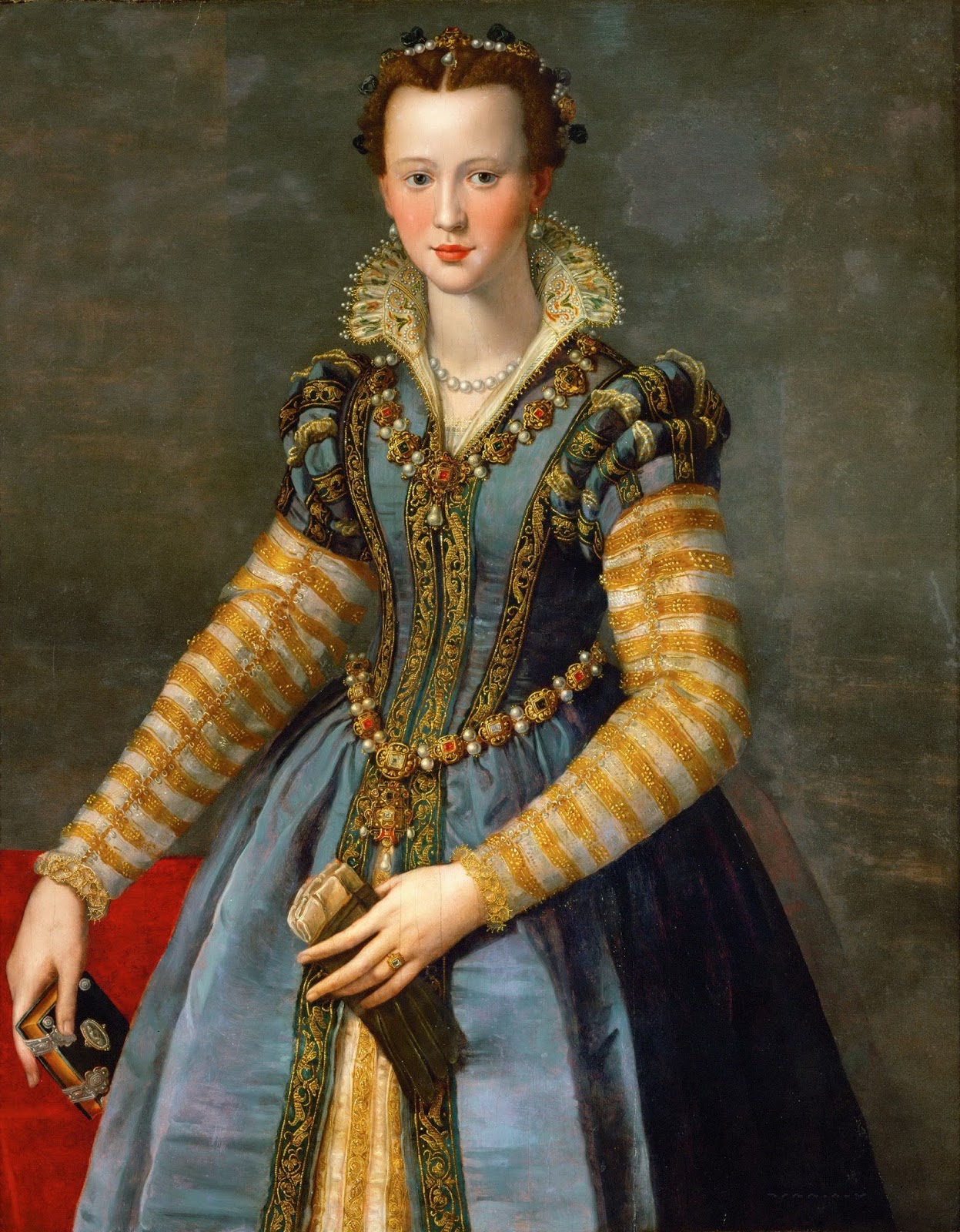
Portrait of a noble girl c. 1571 by Alessandro Allori (1535–1607).
"My strongest memories of adolescence contain despair and anger."

My strongest memories of adolescence contain despair and anger. I was consistently in trouble, and I hated everyone who pointed that out. There were nights when I prayed that I would be good or, more specifically, get out of whatever trouble I was in and do better, only to be disappointed and angered by the failures of the following day.

An anti-teenage pregnancy poster from Flickr.
"Upon graduation from high school at seventeen, I got married, had a baby, and became divorced."

Upon graduation from high school at seventeen, I got married, had a baby, and became divorced—all before the third decade of my life began. It was during the following months and years that I discovered the anesthetizing effects of drugs, alcohol, and illicit relationships. Although I was known as a girl who liked to party, I was utterly lost and joyless, and I was beginning to know it.

Harold Gilman's Mother and Child, painted in 1918.
"I felt like I was fifty years old."

At one point, I can remember telling a friend that I felt like I was fifty years old, which, at that point in my life, was the oldest I could imagine anyone being. I was exhausted and disgusted, so I decided to set about improving myself. I worked a full-time job, took a full course load at a local junior college, and cared for my son. I changed my living arrangements and tried to start over. I didn’t know that the Holy Spirit was working in my heart, calling me to the Son. I just knew that something had to change. Don’t misunderstand—I was still living a shamefully wicked life; it’s just that I felt that I was beginning to wake up to something different.


Best Friends Art - Sisters - Watercolor Painting by Heatherlee Chan
"She told me I needed to be born again."


At this point, Julie entered my life. She was my next-door neighbor, and she was a Christian. She was kind to me, and we became fast friends. She had a quality of life about her that attracted me, and she was always talking to me about her Savior, Jesus. She let me know that she was praying for me and would frequently encourage me to “get saved.” Although I’d had that Sunday school training, what she had to say was something completely different from what I’d ever remembered hearing. She told me I needed to be born again.


Jesus cleansing a leper – medieval mosaic from the Monreale Cathedral
"I knelt down in my tiny apartment and told the Lord that I wanted to be his."


And so, on a warm night sometime in June of 1971, I knelt down in my tiny apartment and told the Lord that I wanted to be his. At that point, I didn’t really understand much about the gospel, but I did understand this: I was desperate, and I desperately believed that the Lord would help me. That prayer on that night changed everything about me. I remember it now, forty-two years later, as if it were yesterday.


Allegory of Salvation by Antonius Heusler (ca. 1555), National Museum in Warsaw.
“What must I do to be saved?”

I knew I needed to be saved, and I trusted that Christ could save me. One man who came in contact with some of Jesus’s followers asked this same question: “What must I do to be saved?” The answer was simple: “Believe in the Lord Jesus, and you will be saved.”

Immanuel Kant introduced the categorical imperative: "Act only according to that maxim whereby you can, at the same time, will that it should become a universal law".
Elyse Fitzpatrick: "Because he is completely holy, that is, perfectly moral, you have to give up any idea that you can be good enough to meet his standard."

Very simply, what do you need to believe in order to be a Christian? You need to know that you need salvation, help, or deliverance. You must not try to reform yourself or decide that you’re going to become a moral person so that God will be impressed. Because he is completely holy, that is, perfectly moral, you have to give up any idea that you can be good enough to meet his standard. This is the good bad news. It’s bad news because it tells you that you’re in an impossible situation that you cannot change. But it’s also good news because it will free you from endless cycles of self-improvement that end in ultimate failure.


A 1907 Christmas card with Santa and some of his reindeer.
"This is the story you hear about at Christmas."


You also need to trust that what you’re unable to do—live a perfectly holy life—he’s done for you. This is the good good news. This is the gospel. Basically, the gospel is the story of how God looked down through the corridors of time and set his love on his people. At a specific point in time, he sent his Son into the world to become fully like us. This is the story you hear about at Christmas. This baby grew to be a man, and after thirty years of obscurity he began to show the people who he was. He did this by performing miracles, healing the sick, and raising the dead. He also demonstrated his deity by teaching people what God required of them and continually foretold his coming death and resurrection. And he did one more thing: he claimed to be God.


Christ on the Cross, by Carl Heinrich Bloch, showing the skies darkened.
"Because of his claim to be God, the leading religious people, along with the political powers of the day, passed an unjust sentence of death upon him."

Because of his claim to be God, the leading religious people, along with the political powers of the day, passed an unjust sentence of death upon him. Although he had never done anything wrong, he was beaten, mocked, and shamefully executed. He died. Even though it looked like he had failed, the truth is that this was God’s plan from the very beginning. 

An Easter postcard depicting the Easter Bunny.
"This is the story that we celebrate at Easter."


His body was taken down from the cross and laid hastily in a rock tomb in a garden. After three days, some of his followers went to go properly care for his remains and discovered that he had risen from the dead. They actually spoke with him, touched him, and ate with him. This is the story that we celebrate at Easter. After another forty days, he was taken back up into heaven, still in his physical form, and his followers were told that he would return to earth in just the same way.


Women at the empty tomb, by Fra Angelico, 1437–1446
"They actually spoke with him, touched him, and ate with him."
I told you that there were two things you need to know and believe. The first is that you need more significant help than you or any other mere human could ever supply. The second need is to believe that Jesus, the Christ, is the person who will supply that help and that if you come to him, he will not turn his back on you. You don’t need to understand much more than that, and if you really believe these truths, your life will be transformed by his love.


Source: Fitzpatrick, Elyse M. Found in Him: The Joy of the Incarnation and Our Union with Christ. Wheaton, IL: Crossway, 2013, pages 213 to 215. 


Monday, May 30, 2016

Sources as diverse as the Bible and Socrates advise people to submit to their government even to the point of going to war

THE BIBLICAL ARGUMENT:
GOVERNMENT IS ORDAINED OF GOD


A shocked mandarin in Manchu robe in the back, with Queen Victoria (UK), William II (Germany), Nicholas II (Russia), Marianne (France), and Mutsuhito (Japan) cutting up a king cake with Chine ("China" in French) written on it.


Scripture seems emphatic on this point.  Government is of God.  Whether in the religious or the civil realm, God is the God of order and not of chaos (Genesis 9:6; 1 Corinthians 14:33, 40).


OLD TESTAMENT DATA ON GOD AND GOVERNMENT


The Ancient of Days (William Blake, 1794)


From the very beginning, Scripture declares that humankind is to "have dominion over ... every living thing that moves upon the earth" (Genesis 1:28).  Humankind is to be king over all the earth.  After the fall the woman is told, "Your desire shall be for your husband, and he shall rule over you" (Genesis 3:16).  When Cain killed Abel, the text implies that he failed to realize that he was his "brother's keeper" (Genesis 4:9-10).  Finally, when the whole antediluvian civilization had become corrupt and "the earth was filled with violence" (Genesis 6:11), God destroyed it and instituted human government.  God said to Noah and his family after the flood, "For your lifeblood I will surely require a reckoning ....' of every man's brother I will require the life of man."  For "whoever sheds the blood of man, by man shall his blood be shed; for God made man in his own image" (Genesis 9:5-6; man = humankind).


The Pyramid of Capitalist System is a common name of a 1911 American cartoon caricature critical of capitalism, closely based on a Russian flyer of c. 1900. The graphic focus is on social stratification by social class and economic inequality


In brief, God ordained human government.  Adam was given the crown to reign over the earth.  And then evil became rampant, and Noah was given the sword to enforce that rule.  Government is of God both because order is from God and because disorder must be put down for God.  Humans have the right from God to take the lives of unruly human beings who shed innocent blood.  Government is invested with divine power.


Battle scene from the Morgan Bible of Louis IX showing 13th-century swords


The sword given to Noah was used by Abraham when he engaged in war against the kings who had committed aggression against Abraham's nephew Lot (Genesis 14).  This passage indicates God's approval of wars that protect the innocent from aggressors.


Samuel anoints David as King, Dura Europos, Syria, 3rd century CE

Although the specific form of government changed throughout the Old Testament, there is a reiteration of the principle that government is of God.  In Mosaic theocracy, the powers of government are quite explicit: "You shall give life for life, eye for eye, tooth for tooth, hand for hand, foot for foot, burn for burn, wound for wound, stripe for stripe" (Exodus 21:23-25).  Even when Israel set up its monarchy contrary to God's plan (1 Samuel 8:7), God nevertheless anointed their choice of a king.  God said to Samuel the prophet, "Hearken to their voice, and make them a king (1 Samuel 8:22).  Later Samuel said, "Do you see him whom the LORD has chosen?" (1 Samuel 10:24).  Even before David was king, he was commanded to fight against the Philistines, who were robbing Israel (1 Samuel 23:1).


Since government is given by God, it follows that to disobey government is to disobey God


The spiked heads of executed criminals once adorned the gatehouse of the medieval London Bridge.


As far as the governments of Gentile nations were concerned, the Old Testament declares that "the Most High is sovereign over the kingdoms of men and gives them to anyone he wishes" (Daniel 4:5).  And from the rest of Daniel's prophecy, it is clear that God ordained the great Babylonian, Medo-Persian, Greek, and Roman governments (Daniel 2-7).  Thus the text indicates that God has ordained government wherever it is found.  And since government is given by God, it follows that to disobey government is to disobey God.  If, therefore, the country's government commands a person to go to war, biblical activism argues that one must respond in obedience to the Lord, for the Lord has ordained the government with the sword, the power to take lives.


NEW TESTAMENT DATA ON GOD AND GOVERNMENT

Ecce Homo ("Behold the Man"), Antonio Ciseri's depiction of Pilate presenting a scourged Jesus to the people of Jerusalem.  In this scene, Jesus Christ, "in whom all things were created" (Colossians 1:16), submits to government.


The New Testament confirms the view of the Old Testament that God has ordained government.  Jesus declares that we should "give to Caesar what is Caesar's" (Matthew 22:21).  That civil authority is God-given is further acknowledged by Jesus before Pilate: "You would have no power over me if it were not given to you from above" (John 19:11).  Paul admonishes Timothy to pray and give thanks "for kings and all those in authority" (1 Timothy 2:2).  Titus is exhorted to "remind the people to be subject to rules and authorities, to be obedient" (Titus 3:1).  Peter is very clear: "Be subject for the Lord's sake to every human institution, whether it be to the emperor as supreme, or to governors as sent by him" (1 Peter 2:13-14).


He is God's servant, an agent of wrath to being punishment on the wrongdoer


Hester Prynne at the Stocks - an engraved illustration from an 1878 edition of The Scarlet Letter


The most extensive passage in the New Testament on the relation of the Christian to government is found in Romans 13:1-7.  The first verse makes it clear that all government is divinely established: "Everyone must submit himself to the governing authorities, for there is no authority except that which God has established."  Therefore, "he who rebels against the authority is rebelling against what God has instituted, and those who do so will bring judgment on themselves (verses 1-2).  The further reason given for obeying a ruler is that "he is God's servant to do you good .... He is God's servant, an agent of wrath to being punishment on the wrongdoer" (verse 4).


Government is ordained of God and whoever resists one's government is resisting God


Pieter Brueghel the Younger, The tax collector's office, 1640

Paul writes, "This is also why you pay taxes, for the authorities are God's servants, who give their full time to governing" (verse 6).  In view of this, the Christian is urged to "pay all of them their dues, taxes to whom taxes are due, revenue to whom revenue dis due, respect to whom respect is due, honor to whom honor is due" (verse 7).  What is especially significant about this passage of Scripture is that it is the New Testament's reiteration of the power of government to take a human life.  Christians are urged to obey the existing governor or king, "for he does not bear the sword in vain" (verse 4).  Government, with its power over life, is "ordained of God," and whoever resists one's government is resisting God (Romans 13:1-2).  It would follow from this, according to biblical activists, that one ought to respond to the government's call to take part in war because God has given the authority of the sword to governing authorities.


THE PHILOSOPHICAL ARGUMENT:
GOVERNMENT IS HUMANS' GUARDIAN


The Death of Socrates, by Jacques-Louis David (1787)


Activism is defended by arguments outside the Bible as well.  One of the most powerful defenses of this position comes from Plato's dialogue Crito.  In it, he offers three explicit reasons (and two more implied ones) why a person should not disobey even a government that is unjustly putting him to death.  The scene is the prison where Socrates awaits his death after he has been charged with impiety and sentenced to drink the cup of poison.  Socrates' young friend Crito urges him to escape and evade the death penalty.  In reply, Socrates gives five reasons for obeying an unjust government, even to the point of death.


Government is the human's parent


Charity, by French painter William-Adolphe Bouguereau

One ought not disobey even an unjust government.  "First, because in disobeying it he is disobeying his parent."  By this Socrates means that under the sponsorship of government, the individual is brought into the world.  One is not born into a lawless jungle but comes into this world under the parentage of the state.  The state makes one's very birth more than barbaric: it is a birth into a state of civilization rather than into anarchy.  Just as parents spend months in preparation and anticipation for a child, many years have likewise been spent in maintaining the state, which makes a civilized birth possible, and these years may not be lightly regarded later because a person finds oneself at odds with the government.  If one were to disobey the government, says Socrates, would it not reply, "In the first place did we not bring you into existence?  Your father married your mother by our aid and begat you.  Say whether you have any objection to urge against those of us who regulate marriage.  None, I should reply."


Government is the human's educator


Adriaen van Ostade, The Schoolmaster, 1662


Socrates offers another reason for obedience to one's government.  "Second, because it is the author of his education."  The implication here is that the very education making persons what they are (including their knowledge of justice and injustice) was given to them by their government.  They are civilized, and not barbarian, not only by birth but also by training.  And both the birth and training were made possible by the government that is now demanding one's life.  What can one reply against governments that "after birth regulate the nurture and education of children, in which you also were trained?  Were not the laws, which have the charge of education, right in commanding your father to train you in music and gymnastic?  Right, I should reply."  From this it follows that government could say to us, "Since you were brought into the world and nurtured and educated by us, can you deny in the first place that you are our child and slave, as your fathers were before you?"  And if this is true, people are not on equal terms with their government.  They have no more right to strike back at it and revile it than one does to hit one's mother or father.  Even if government would destroy us, we have no right to destroy it in return.  Persons who think that they do have such a right have "failed to discover that [their] country is more to be valued and higher and holier far than mother or father or any ancestor."  Government is not only prior to the individual citizen, but also superior to the citizen as well.


The governed have a duty to obey government


Marie Antoinette's execution on October 16, 1793


The third reason Socrates gives for a person obeying the government is that "he has made an agreement with [it] that buy pledging allegiance to that government, binds them to its laws.  By the very fact that one takes a given country as one's own country, that person has thereby made a tacit covenant to be obedient to its commands.  Hence, "when we are punished by [our country], whether with imprisonment or stripes, the punishment is to be endured in silence; and if she leads us to wounds or death in battle, thither we follow as is right."  For if people accept the privileges of education and protection of their government, then they have thereby implicitly agreed to accept the responsibility to obey their government's laws, submit to its penalties, and even to go to war for it.


The governed are free to leave their government


The execution of Robespierre.


There are at least two other implied arguments that Socrates uses to content that one ought not disobey one's government.  "Anyone who does not like it and the city, l may go where he likes ... But he who has experience of the manner in which we [rulers] order justice and administer the State, and still remains, has entered into an implied contract that he will do as we command him."  Socrates makes it clear, however, that whatever emigrating a person is going to do must be done before being indicted or drafted by one's country.  To flee in the face of one's responsibilities to the government is "doing only what a miserable slave would do, running away and turning your back upon the compacts and agreements which you made as a citizen."  Those who are not willing to obey their country should find another country that they can obey.  Persons who assume the protection and privilege of a country by constant presence there as citizens must not seek exile simply because the country's demands are undesirable.


Without government, there would be social chaos

 Ministry of Interior Iraqi Federal Police perform a riot control demonstration in the civil disorder management course on Camp Dublin, Baghdad, Iraq, Aug 20, 2011.


Another reason one should not disobey one's government is implied in Socrates' question "And who would care about a State which has no law?"  An unjust law is bad, but no law is even worse.  Even a bad monarchy is to be preferred to anarchy.  Any government is better than no government at all; if people were to disobey their government in what they felt was unjust or undesirable, social chaos would result.  If obedience to government were determined individually or subjectively, then no law would be immune from some citizen's disapproval or disobedience, and the result would be chaos.  To adapt a phrase from Scripture, having no laws that are binding on all citizens would be for everyone to do what is right in their own eyes (cf. Judges 21:25).  And the result would not be a society but a social chaos.


Even a government that is closed to its citizens would be better than one open to revolution among its peoples.  In these give arguments Plato states the major points used as basis for activism.  Persons should always obey their government because it is their guardian.  Government, even one that seems to be unjust, should be obeyed to the point of going to war.  For without government, humans would be no better than savages, living in a state of ignorance and anarchy.  Hence, no matter how undesirable their responsibilities to their government may be, persons nevertheless are obligated to obey it as their parent and master.


Source:  Geisler, Norman L. Christian Ethics: Contemporary Issues and Options, 2nd ed. Grand Rapids, MI: Baker Academic, 2010, pages 220-224.


Douglas F. Kelly compares God's ability to speak light into the dark human soul and make it reborn to God's speaking light into existence.

The Sending Forth of Light The Ancient of Days  ( William Blake , 1794) A third divine action occurred on the first day of creation: ...